
Categories
Tags
30days AI ai arch automation backend blog blogging booking burnout career chatbot cms codebar codeyourfuture coding cybersecurity design development devops django docker email express fastapi flight Flight Booking System full stack full-stack fundraising gmail google-fit GPT-3 hyprland interviews javascript journey jupyter LinkedIn linux manus MERN mongodb NextJS nextjs notion omarchy OpenAI openai pandas planning portfolio programming project python react ReactJS search sendgrid smtp software software development tailwind
239 words
1 minutes
Day 13 of 30 Days of FastAPI - Transitioning to SQLAlchemy — Beyond the JSON File
Today, we replace our local db.json with a SQLite database using SQLAlchemy.
1. What is an ORM?
An Object-Relational Mapper (ORM) allows you to interact with your database using Python classes instead of writing raw SQL (like SELECT * FROM items).
2. Setting Up the Engine
First, we need to install the tools. With uv, it’s a single command:
uv add sqlalchemy
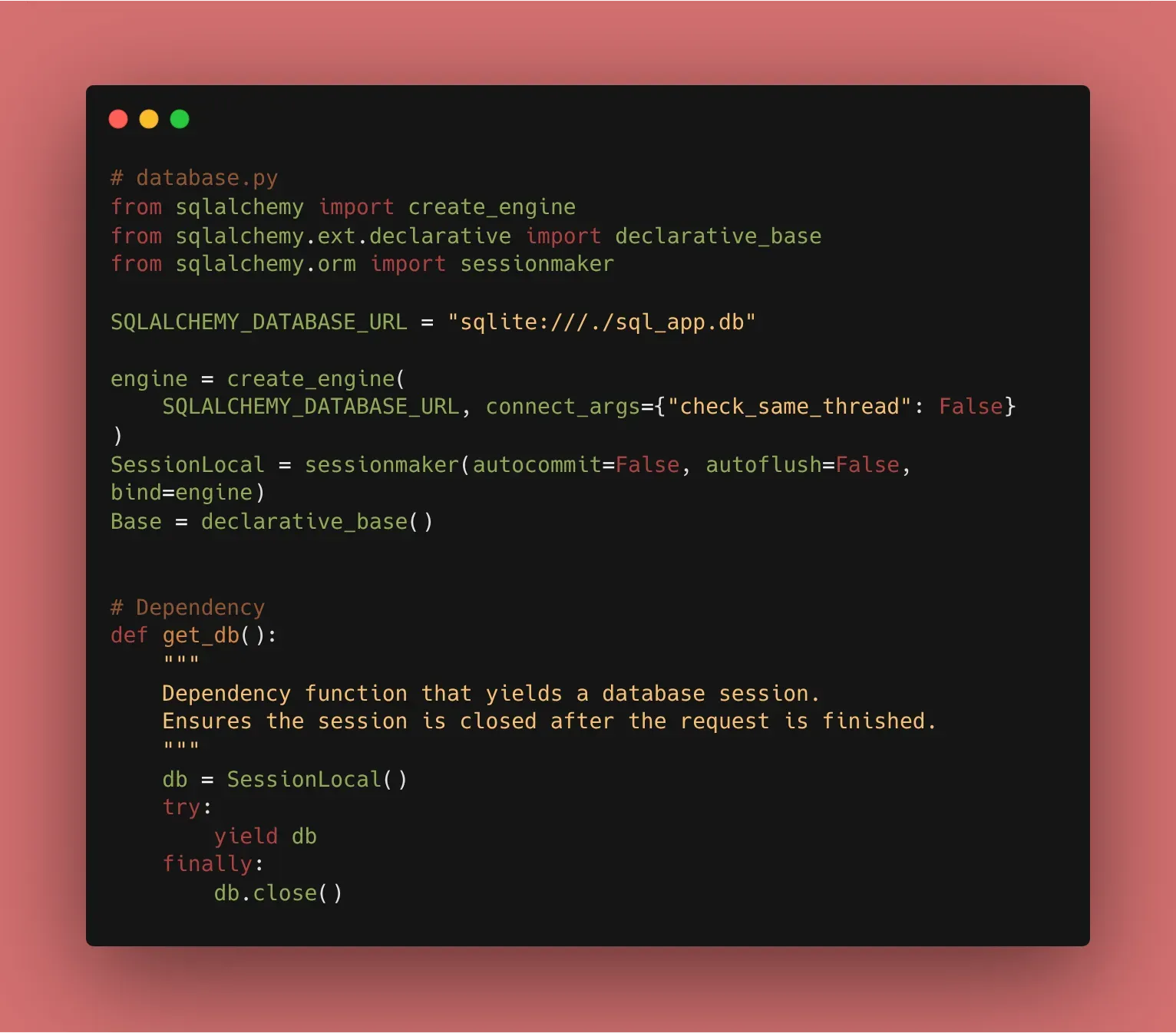
Then, we create the database.py file to handle our connection:
from sqlalchemy import create_engine
from sqlalchemy.ext.declarative import declarative_base
from sqlalchemy.orm import sessionmaker

SQLALCHEMY_DATABASE_URL = "sqlite:///./sql_app.db"

engine = create_engine(
    SQLALCHEMY_DATABASE_URL, connect_args={"check_same_thread": False}
)
SessionLocal = sessionmaker(autocommit=False, autoflush=False, bind=engine)

Base = declarative_base()
3. Creating the Database Model
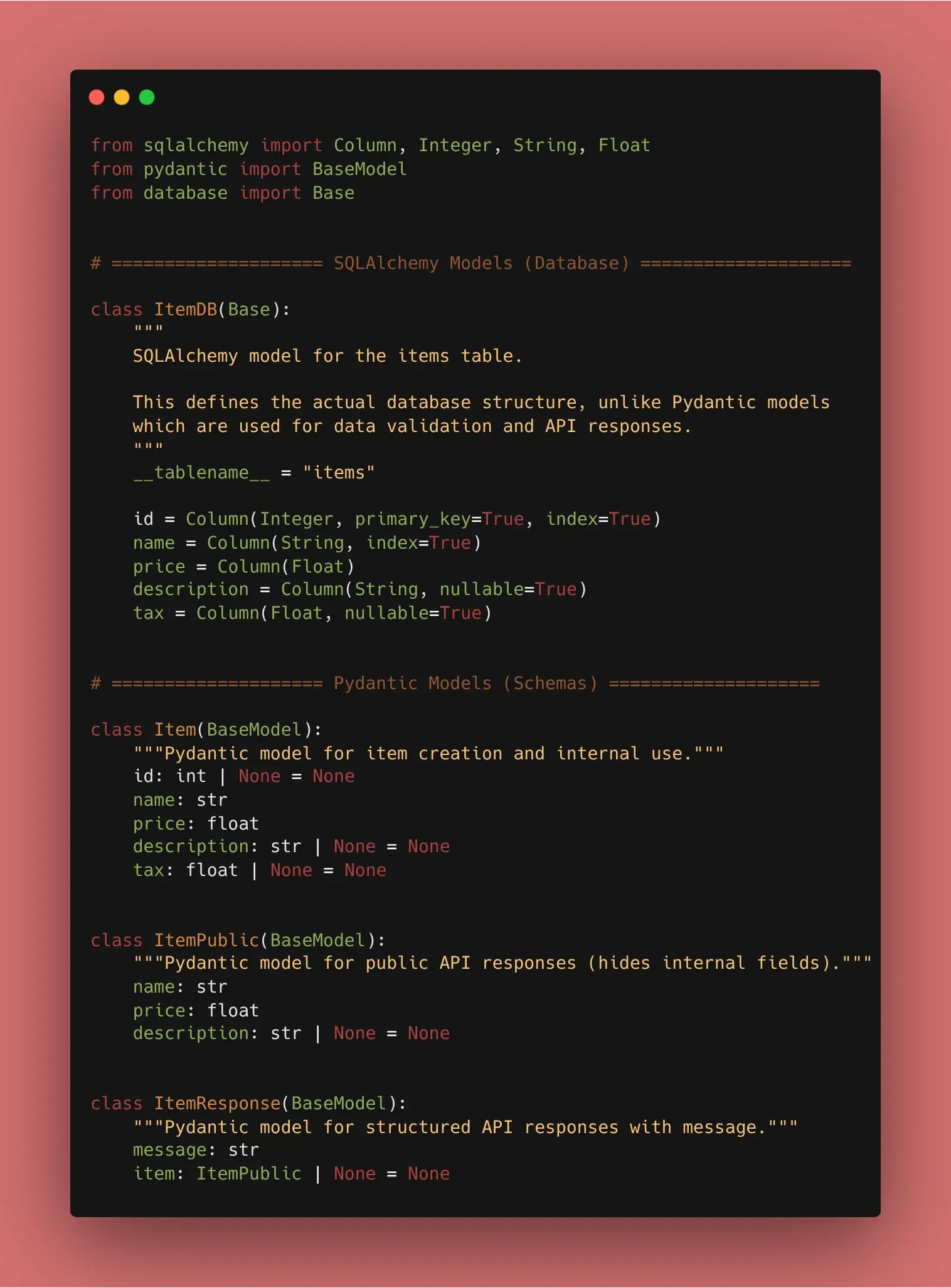
This looks similar to a Pydantic model, but it serves a different purpose: it tells the database how to create the table.
from sqlalchemy import Column, Integer, String, Float
from .database import Base

class ItemDB(Base):
    __tablename__ = "items"

    id = Column(Integer, primary_key=True, index=True)
    name = Column(String, index=True)
    price = Column(Float)
    description = Column(String, nullable=True)
4. Why the separation?
Now we have three types of models:
- SQLAlchemy Models: For the Database structure.
- Pydantic Models (Schemas): For data validation and API responses.
- Response Models: For what the user actually sees.
This separation keeps your code clean and prevents your database structure from being leaked to the public!
🛠️ Implementation Checklist
- Installed
sqlalchemyusing uv. - Configured the
engineandSessionLocal. - Defined the
Baseand theItemDBmodel. - Verified that
sql_app.dbis created when the app starts.
📚 Resources
- Official Docs: FastAPI SQL (Relational) Databases
- Book: FastAPI: Modern Python Web Development (Chapter 6: Working with Databases).
Day 13 of 30 Days of FastAPI - Transitioning to SQLAlchemy — Beyond the JSON File
https://beyond400.vercel.app/posts/fastapi-13/